Category: Science and Research

  • Understanding Diabetes Mellitus

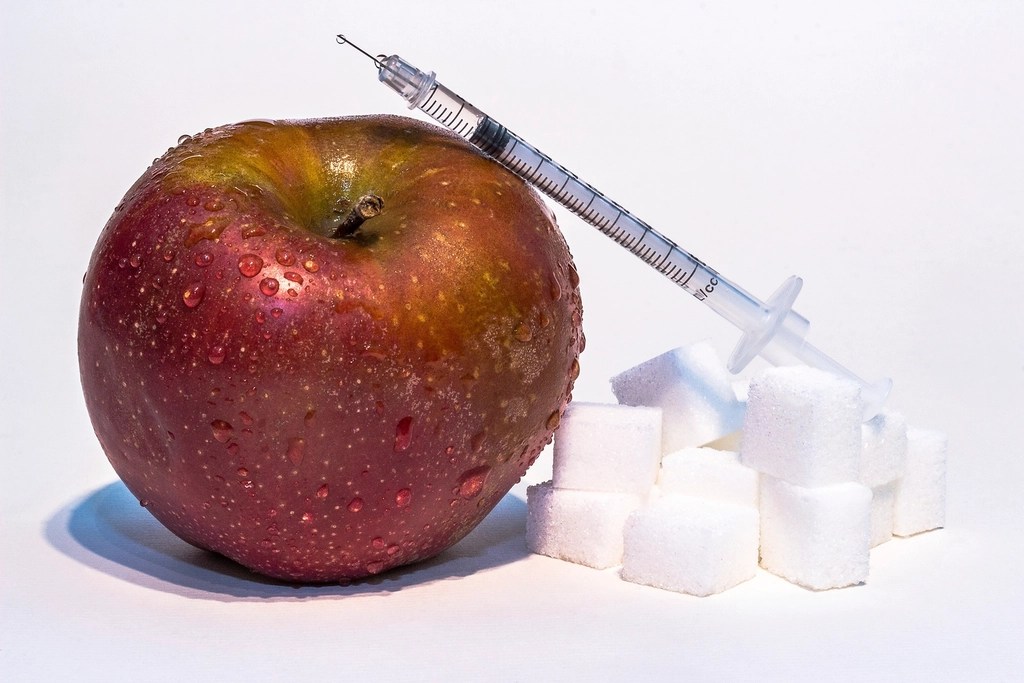
    Diabetes Mellitus basically means that your body is not processing sugar – glucose – properly, leaving your blood sugar levels high. Why does that happen? Let’s discuss.

    When you’re diagnosed, doctors usually rely on a test called HbA1c, or glycosylated hemoglobin. This measures how much hemoglobin in your blood is bonded to glucose over the past three months. When your body has a little more sugar than it should, it binds to hemoglobin. If that percentage is high, it’s a warning sign – well, you are in trouble.

    There are two main types of diabetes mellitus, broadly classified as insulin-dependent (Type I) and insulin-resistant (Type II).

    Type I Diabetes, or insulin-dependent diabetes, usually develops in children. The beta cells of the islets of Langerhans in the pancreas cannot produce enough insulin. This is usually caused by autoimmune destruction, meaning the body attacks its own pancreas. People with Type I need an external supply of insulin to maintain healthy blood sugar levels.

    Type II Diabetes, on the other hand, is often linked to insulin resistance – the body produces insulin but cannot use it effectively. Most people diagnosed with Type II are overweight, have sedentary lifestyles, and eat poorly. Can it be reversed? Yes – and not many people discuss this. Because the body still produces insulin, proper diet, exercise, and medication can help restore normal sugar levels. Monitoring is done through tests like HbA1c, fasting blood sugar, post-meal blood sugar, and random blood sugar.

    What happens to those who do not take care of themselves? This is where complications begin. High blood sugar puts stress on every organ system. Excess sugar can turn into fat and even Type I diabetics can become overweight. Fat deposits accumulate around visceral organs, inside blood vessels, and in the liver, straining them. Fatty liver disease can progress to non-alcoholic cirrhosis. The kidneys undergo tremendous stress, and blood vessel blockages increase vulnerability to heart attacks and strokes. Reduced blood flow to the eyes can damage retinal cells, causing blindness. Poor circulation to the limbs can lead to gangrene – infection sets in where blood supply and immune response cannot reach, and tissue dies, requiring removal.

    High blood sugar also feeds harmful bacteria, making infections harder to treat. And here’s the vicious cycle: the infection itself keeps blood sugar high, because the body responds to infection with stress hormones that raise glucose levels. So, the sugar feeds the bacteria, and the bacteria keep sugar levels elevated – creating a loop that is difficult to break without careful medical intervention.

    Understanding all this – the mechanisms, the complications, the vicious cycles – can be daunting. But knowledge is power. For me, seeing these numbers and understanding the risks was both frightening and motivating. It’s why I’ve committed to taking care of myself, not just with diet and exercise, but with awareness and respect for my body.

    I started this journey overweight and facing the threat of diabetes. Today, I am proud to say I have reversed it – I am pre-diabetic. Prediabetes is a warning, not a sentence. With consistent effort, small lifestyle changes, and careful monitoring, it can be reversed. Every choice – the food I eat, the steps I take, the workouts I complete – is a step toward breaking these cycles before they cause harm.

    Diabetes isn’t just about sugar. It’s about health, self-discipline, and the relationship we have with our bodies. And for me, that relationship is worth fighting for, one day, one meal, and one workout at a time.

  • My Aims in Life

    My interest in biomedical research in oncology began with intellectual curiosity but deepened through a personal encounter with physiological dysfunction that remained unrecognized for years. From 2017 through the end of my undergraduate studies in 2019, I experienced severe menorrhagia, chronic fatigue, unnatural weight gain, and debilitating headaches that steadily eroded my stamina and cognitive clarity. Medical consultations repeatedly concluded with broad assumptions that are common amongst gynaecologists in India who rely on limited tools available to diagnose “unmarried women” – PCOS, weight-related issues, or possible endometriosis. These explanations never accounted for the intensity of my symptoms, yet without further investigation, they became the default narrative combined with unfortunate and dismissive remarks, OCPs for the bleeding and paracetamol for the headache that unfortunately did nothing to eliminate the root of the problem. I completed my undergraduate degree in this state, often managing only the limited goal of “If I can just pass, that will be enough,” because that was all my body allowed.

    A turning point came only during the first year of my graduate program, when I finally underwent a complete hormonal evaluation at the university hospital. The results after a battery of tests revealed the actual cause: a 0.5 mm pituitary microadenoma, a benign tumour responsible for persistent hyperprolactinemia. Its size made surgery unnecessary, but it did need medical management. As treatment took effect, the fatigue and the brain fog that had shaped my undergraduate performance began to lift. My physical and intellectual capacities finally began to realign. And I passed my graduate degree with distinction.

    This clarifies something essential: my undergraduate transcript reflects an untreated and undiagnosed illness that was unfairly dismissed, not my academic ability. The diagnosis came too late to alter the record, but it fundamentally changed the context in which I understand it.

    My graduate years coincided with a return to physiological and academic stability. As my health improved, so did my academic performance. I completed my Master of Pharmacy degree with First Class (Distinction) while still receiving treatment, contributed to ongoing research during my graduate thesis (after a brief health-related sabbatical), and co-authored a publication stemming from my undergraduate work. These achievements reflect my capabilities once health was no longer an obstacle, while also illustrating how delayed or incomplete diagnoses can profoundly reshape academic and professional trajectories, often leaving individuals unfairly labelled as “underachievers.”

    My personal history has strongly influenced my research interests, particularly in ovarian cancers, where diagnoses are given typically late into disease development. My experience with an overlooked endocrine disorder has made me acutely aware of how frequently women’s symptoms are minimized or attributed to generic causes, allowing underlying pathologies to progress unnoticed. I am especially interested in the molecular and signalling disruptions that initiate and sustain these cancers, the interplay between hormonal regulation and tumour behaviour, and how early-stage alterations can be leveraged for improved detection or therapeutic intervention.

    Through my coursework and laboratory experience in both my undergraduate and master’s degree, I have developed a solid foundation in molecular biology, cell biology, genetics, and cancer-related biochemical pathways. I aim to build on this foundation in a research environment committed to rigour, clarity, and translational relevance. My goal is to contribute meaningfully to molecular oncology, particularly in areas where improved mechanistic understanding can enhance early diagnosis and patient outcomes.

    I now seek to join a program where I can apply my training, persistence, and scientific commitment to impactful work. The challenges of my undergraduate years do not define my capability; they provide context for my resilience and focus. I am determined to advance research in ovarian cancers through careful inquiry, strong molecular grounding, and a commitment to bridging fundamental biology with better diagnostic and therapeutic possibilities.

  • Scientists Need to Speak Human Too

    Have you ever watched The Big Bang Theory? It’s one of my favourite shows. While it exaggerates the awkwardness of scientists quite a bit, being from science (I have a Master’s Degree in Pharmaceutical Biotechnology) myself, I can safely say – we are often terrible communicators. Especially when we really, really love our work. Not many of us are born with the eloquence of Neil DeGrasse Tyson, Carl Sagan, or Bill Nye. And if we were, perhaps we wouldn’t have burned the midnight oil trying to decipher what the professor was droning on about in class, simply because they couldn’t capture our attention.

    Most professors at elite universities are there for the research infrastructure. While teaching is technically part of their job, many prefer to focus on nurturing PhDs and post-docs in their labs rather than undergrads who struggle with the basics of physics or biochemistry. Some outright dislike teaching undergrads and only teach grad students.

    Another thing many younger scientists find themselves lacking in – and have to consciously catch up on – is social skill. Professors in their sixties or older don’t struggle as much because social graces were taught and practiced more actively in their day. But today, a large number of researchers either cannot socialize easily or simply dislike socializing beyond what’s absolutely necessary for their science.

    Most research funding these days comes from government bodies or from private individuals who “want to make a difference” and support science. These generous individuals, often from business or philanthropic backgrounds, want to talk to scientists about their work. They’re usually polite and curious. The least one can do is return that politeness and explain one’s work clearly – without drowning them in jargon so dense they can’t find their own keys at the end of the night.

    We may have different qualifications or ways of thinking, but if you’re seeking support for your research, communication becomes part of your responsibility. Saying, “Give me funding, I can’t explain my project as it is too complicated,” is not going to inspire confidence.

    I’ve seen this up close in cancer biology – my own field of interest – where I want to work. The work we do is deeply complex and emotionally heavy. We dive into pathways, mutations, and cell lines for hours, speaking in a language so specific that even fellow biologists from other fields sometimes struggle to follow. But when someone outside the lab – say, a patient’s family, a donor, or a policymaker – asks what we do, we falter. We either oversimplify or, worse, confuse them with jargon until their eyes glaze over. Honey, there is a middle ground. Please, use that!

    Unfortunately, this overly complicated language and a lack of approachability have already eroded public trust in science – and scientists themselves have, knowingly or not, contributed to that gap. It’s time we tried to fix it. Perhaps by teaching those entering scientific fields not just technical skills, but also the basics of communication, courtesy, and social skills.

    That’s something I find myself deeply drawn to. Science doesn’t need to be cold to be precise, and a bit of warmth goes a long way in helping others understand and value what we do. Maybe, just maybe, it’s time for a new kind of teacher – the kind that cares for both the bench and the blackboard.